Before leaving home for missions I attended a one-week world mission course thinking that I had everything to gain and it could help me prepare for the gargantuan tasks that lay ahead. I was not disappointed; it was a good learning experience. We learn about Biblical basis for missions, the history and expansion of Christian movement through missions, mission strategy, the remaining task, strategies, and cross cultural considerations.
However, looking closely at the curriculum and materials presented, theological basis or at least any discussions about the importance of theology in doing missions was definitely lacking. The discussion was dominated by anthropological ideas about cross-cultural considerations. The course culminated with a very elaborate “contextualize worship.” This was when we had a Christian worship service done in Islamic way. We dressed like Muslims and adopted their gestures in prayers and worship but with God through Christ as the object of worship. I didn’t dispute this, I thought that was great. However, I got the impression that contextualization done in this manner is not really contextualization in the true sense of the world. But when this mission course was being done all over the country, this conveys to the churches and (would-be) missionaries that this is what contextualization is all about.
This is the reason that the idea of contextualization have been under fire recently. Its critics would say that contextualization advocates the integration of religious practices into the culture of the believer. For example, a Muslim who became a Christian can continue to go to the mosque and pray five times a day facing Mecca or moderately Christian Muslims can have a mosque like atmosphere, write their own music or use the Koran besides the Bible when they worship. This concept presumes that religion is part of cultural identity and should not be abandoned when one becomes a Christian. If contextualization is being dealt with on the level of anthropology or culture this perspective would really create a big problem for missionary endeavors. If contextualization is limited to culture it is indeed unhelpful and irresponsible concept, and as mentioned above likely to create more problems than solution.
This is the reason that I believe that contextualization should start from theology. Presumably contextualization leads to indigenization. There have been many attempts in many Asian countries to create an indigenous Christian churches. But most of the attempts are concern more with the form rather than the content of the gospel. For example the use of indigenous musical instruments and melodies for religious hymns, or using local drama and dress in presenting the Christmas story, or using the traditional church building as opposes to western style church building. According to a Burmese theologian, these are just attempts to put the same wine in different bottle. In order for the Gospel to be contextualized and acceptable in particular culture, a considerable theological reflections and articulations is essential even though many would consider this activity as pointless and redundant. This is in the light of the prevailing concepts that and theological skill and articulation are unnecessary in the missions field.
Stephen Bevans, a theologian, missionary and teacher provides a valuable assistance for those who struggle with the issue of theological contextualization. He describes models only four are cited here) for understanding contextual theology. These models are used to aid in the understanding of truth but the truth they tried to illuminate is finally larger than any model used to approach it.
First is the translation model. “Translation” suggests the movement from one language system to another, with the primary intent of maintaining the meaning of the words that are used. A translation model of contextual theology rests on the twin assumptions that the gospel may be reduced to a core of meaning, and that all cultures shares a similar structure of meaning and communication. The core of meaning emphasized by those who employ a translation model for theology is heavily quantitative and propositional. What is at stake is the introduction of the facts and concepts of the gospel to a context where the gospel was previously unknown.
Second is the anthropological model. Anthropological model strives for the preservation of the uniqueness of any culture where the gospel takes root and grows toward maturity. Since God is the creator of the world, and humanity, there must be something of God in every culture. This model begins with the affirmation of potential goodness of humanity and the cultures they establish. A theologian who employs this method recognizes that the foundational work of proclaiming the gospel is leaning much about a culture that she or he can become as full a participant as possible in the culture. Related to the foundational work of learning the culture is the explicit theological task of discerning the presence of God within the culture.
Third is the praxis model. This method includes expecting and accepting that authentic theological pursuits are constantly moving between informed and committed responses to human needs and reflections upon how the responses clarify and reshape confessions of faith. Culture, then, is the context within which the praxis model operates. However, culture is neither a target to be hit nor a goal to be achieved. Here culture is a dynamic reality that is going to change with or without theological influence and, therefore, becoming involved with culture is a theological mandate.
Fourth is the synthetic model. The theologian working with this model is first of all interested in dialogue between and among the features of the gospel and culture. Here the uniqueness of the gospel rooted in scripture and traditions, and the uniqueness of the culture as a composite of centuries of growth and change. Holding both the uniqueness of gospel and culture in tension, this model strives for the theological maturity that can emerge out of honest conversation about the ways the gospel and culture mutually pursue freedom and wholeness. Theologian who works with this model is not creating something artificial from synthesizing two realities (gospel and culture) rather creates a third thesis incorporating the best of each reality. The goal is not to rank the contributions of the gospel and culture, but rather to incorporate the values of the gospel and culture when they are most appropriate.(Rick Wilson, Contemporary Gospel Accents, 7-9)
This post attempts to inform missionaries and missionary sending bodies of the importance of theological skill in doing mission. If our goal is to realize a genuine indigenous Christian churches existing in 10/40 window we have understand that a minimal theological insights is indispensable to the task.

Reflections on Christian theology at the intersection of culture, worldview, and global missions.
Showing posts with label cross-cultural theology. Show all posts
Showing posts with label cross-cultural theology. Show all posts
Friday, November 17, 2006

Saturday, November 11, 2006
The Christian problem of God in its encounter with Buddhism
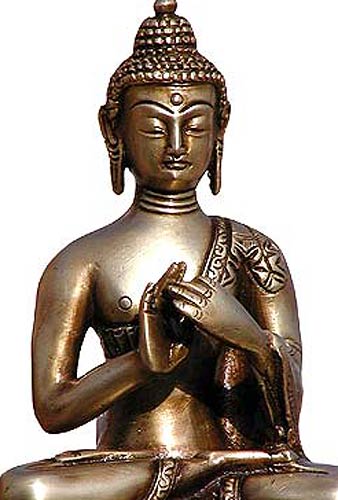
Our internet service provider had been down for a while. So I missed reading my favorite blogs for days. Anyways, it's getting colder here everyday. But I enjoyed the coolness of the night, sipping coffee while having a theological conversation with my Burmese Pastor. We talked a lot about the problem of the different tribal churches here and the difficulties of communicating the gospel to the Buddhists both in Thailand and Myanmar. It dawned on me that my knowledge about a Buddhist's perception of the world and of the deity is so little. I still have to learn a lot. If I want to make the gospel clear to them I have to know how their minds works. My Pastor is trying to help by presenting me theological papers written by his professor in the seminary. As he knows I am running blog, he ask me if I can post it here. And I gladly oblige.
The following thoughts are from his good professor a Burmese theologian named Professor U Khin Maun Din. This section deals with the problem of Burmese Christians Theology with its encounter with Theravada Buddhism. This part deals with the conflicts on the concept of God between Christianity and Buddhism. The next post will deal with the problem of Christology.
Buddhism is considered to be an atheistic religion or at best a non-theistic faith by many Christian theologians and religious philosophers. It is because Buddhism denies the existence of God as personal being or a creator. This personalistic idea of God is rejected by the Buddha because it could not explain the vexing problem of evil. But the Buddha does not deny the existence of what can be philosophically described as “the Transcendence” or “the Ultimate Reality.” If affirmation of the existence of a Transcendental Reality is what we meant by theism, then Buddhism is profoundly theistic. This raises a big problem for traditional Christian theology that insists that God is to be understood as Personal Being. However, process theologians’ understanding of God as becoming rather than being. Here process theologians give way to a more living, dynamic and changing conception of God rather than the traditional view of God as complete, perfect and static. Some of them agree with Paul Tillich in describing God as “the Ground of our Being.” This impersonal representation of God is considered by its critics as closer to Buddhism than Christianity. However, this paved the way to the possibility that the Christian idea of God can be made understandable for Buddhism and other Asian transcendental religions.
However, in the view of the Theravada Buddhists these understanding of the deity are still relative ways of understanding the Transcendence. For Buddhists the best way to describe the Ultimate Reality is not to describe it all because the Absolute can never be described by relative human terms. This theology is not peculiar to Buddhism alone. The Taoists of ancient China also held a similar view of Reality. They say that “the Tao is the name of the nameless one.”
The point here is: can we as Christians insist to speak about God as a person or a personal being in an absolute sense. Is it not closer to the truth to speak of God as a person as well as not-a-person; that God is a Being as well as a Becoming, that God exists and also does not exist?
This way of understanding the theos has been referred as the “the Yin-Yang way of Thinking.” It is the Both/And method of doing theology and being advocated by Asian theologians to be more progressive as opposed to Either/Or method used by classical Christian theology in formulating theology. The Either/Or way of thinking in the West not only promoted but shaped the absolute dogma of God. The God of dogma is not God at all. The God who is absolutized by human words is less than God of Christianity.
From such perspective the “silence” of the Buddha becomes pregnant with meaning. To the Buddha the relatively best way of describing the true nature of the Transcendence is not to describe it at all. This methodology can be discern as common in major oriental philosophies like Taoism of ancient China, the Jains of India among others. The oriental refusal to predicate the Transcendence with the western philosophical categories should be interpreted as the denial of the “existence” of “God” as a “Personal Being or “a Creator” is not a total rejection of the indescribable, transcendental theos.
What can we learn from this Oriental Methodology should Christian theology continue to keep on referring to God as a person in an absolute sense? Is it against the Bible to speak of God is a Person, as well as-not-a Person, that God is a Father as well as not-a-Father, that God is a Creator as well as not a Creator, that God is a Thou as well as not a Thou?
How must we interpret God’s answer to Moses: “I am that I am?” Is the word “I” to be understood as referring to a Self, a Soul, an Ego, an Atman, a Spirit or even a Geist as used by Hegel? If that scripture text means: “I will be to you what I will be to you,” as it is not interpreted today, then is it not the case that the answer is to be understood functionally and not ontologically? If that is the case, then metaphysically speaking, such an oriental way of understanding the Theos can be more comprehensive and sometimes even more faithful to the Gospel than most dogmas attached to the traditional Christian doctrine of God.
I can understand the difficulty of Christians in Burma to conceive God in non-personal terms. We are being so metaphysically conditioned by the traditional theology that the very idea of a non-personal God becomes totally incomprehensible to us. But this means that we must also be sympathetic to the Buddhists for whom the very idea of God as Personal Being is incomprehensible. If Christian theology in Burma and in Thailand still persists in speaking of God only and absolutely as a Person then the Christian God will be reduced to the level of a Nat or a Brahma.
Wednesday, November 08, 2006
Cross-cultural Theology
Over at Faith and Theology our good friend Ben Myers cites a perfect example of theological contextualization of the Nicene Creed in Africa. This reflects the kind of theology that Christians commonly do as part of their daily lives in the Third World. This shows how theology is being done by Christians who respond faithfully to the challenges their lives present to them. It is admirable for both the local people and the missionaries who evidently brought the gospel to them to develop a “creed” that is so concrete and so real compare to the Western theology that tends to be abstract and critical. Theirs is a theology that is closer to the real-life situations of people whose lives are touched by God that is so different from our experiences of God.
Because we live in a world that is radically different from them, we tend to ignore and even despise their theological reflections and easily dismiss them as unsophisticated and syncretistic if not heretical. We fail to appreciate that theological framework is a result of their experiences with God and the Scripture.
When my family I responded to call to mission, a colleague who knows me as someone who has some theological training told me that it is good that I come because I can teach the local people good theology. My fellow missionary thought that the theology of this people is wrong and I can help them correct it. His thinking is that “correct” theology has already been formulated and I have to reinforce this theology to the locals. Of course he is referring to the Baptist theology that is a result of centuries of articulation from Europe and North America, adopted and apparently worked in the Philippines thus can be adopted here easily. As I always hear some people would say we need not to reinvent the wheels in doing cross-cultural theology.
Now the question that need to be addressed here is, what is the role of the missionaries or theologians in doing theology cross culturally? For me, the most important thing that we can do first is to be a good listener, be a learner. Then we will become a dialogue partner in developing their theology descriptively and interpretatively then and only then can we lead them to critical reflections that supposedly should result to a discipline thought and good actions. William Dyrness states this clearly.
Because we live in a world that is radically different from them, we tend to ignore and even despise their theological reflections and easily dismiss them as unsophisticated and syncretistic if not heretical. We fail to appreciate that theological framework is a result of their experiences with God and the Scripture.
When my family I responded to call to mission, a colleague who knows me as someone who has some theological training told me that it is good that I come because I can teach the local people good theology. My fellow missionary thought that the theology of this people is wrong and I can help them correct it. His thinking is that “correct” theology has already been formulated and I have to reinforce this theology to the locals. Of course he is referring to the Baptist theology that is a result of centuries of articulation from Europe and North America, adopted and apparently worked in the Philippines thus can be adopted here easily. As I always hear some people would say we need not to reinvent the wheels in doing cross-cultural theology.
Now the question that need to be addressed here is, what is the role of the missionaries or theologians in doing theology cross culturally? For me, the most important thing that we can do first is to be a good listener, be a learner. Then we will become a dialogue partner in developing their theology descriptively and interpretatively then and only then can we lead them to critical reflections that supposedly should result to a discipline thought and good actions. William Dyrness states this clearly.
Here is where the sympathetic listening of outsiders becomes important. I believe that encouraging people to articulate and defend what they believe—by simply allowing them to tell their stories—is a first step, not only in Christian growth, but in more self-conscious and critical theological reflection. Giving them a voice is a necessary prerequisite to allowing them to be dialogue partners either with us or with the major voices of Christian tradition. From these experiences I have become convinced that we have typically put things in reverse order in our theological education. In our zeal to get people to reflect theologically we pull out the largest artillery, insisting that they read Calvin and Barth before they have any notion what theology is, or how they really feel about God. Instead we ought to take the time to help people understand what their own assumptions about faith and salvation are, and only then them in conversation with what others in their traditions (or other traditions) have said about these things.
Willaim Dyrness. Invitation to Cross-cultural Theology. p. 36
Subscribe to:
Posts (Atom)
-
Text: Galatians 4:6-7 Today is “FATHER’S DAY”. This is the day of the year when we remember and honor our earthly fathers. Fo most of us thi...
-
 We had a wonderful Palm Sunday worship service yesterday. It was a good occasion to start the observance of the Holy week which begins today...
 -
.jpg) Now our feet touched the soil of the mission field we are assigned, we immediately looked for a local church. We found one right away; the c...
Now our feet touched the soil of the mission field we are assigned, we immediately looked for a local church. We found one right away; the c... -
 It's holy Wednesday, but of course this day does not happen here in Thailand. So I can't help but reminisce what we should be doing ...
 -
This post is about a response to the modern-day prophecy about the Philippines. A prophecy of almost the same nature but different content ...
